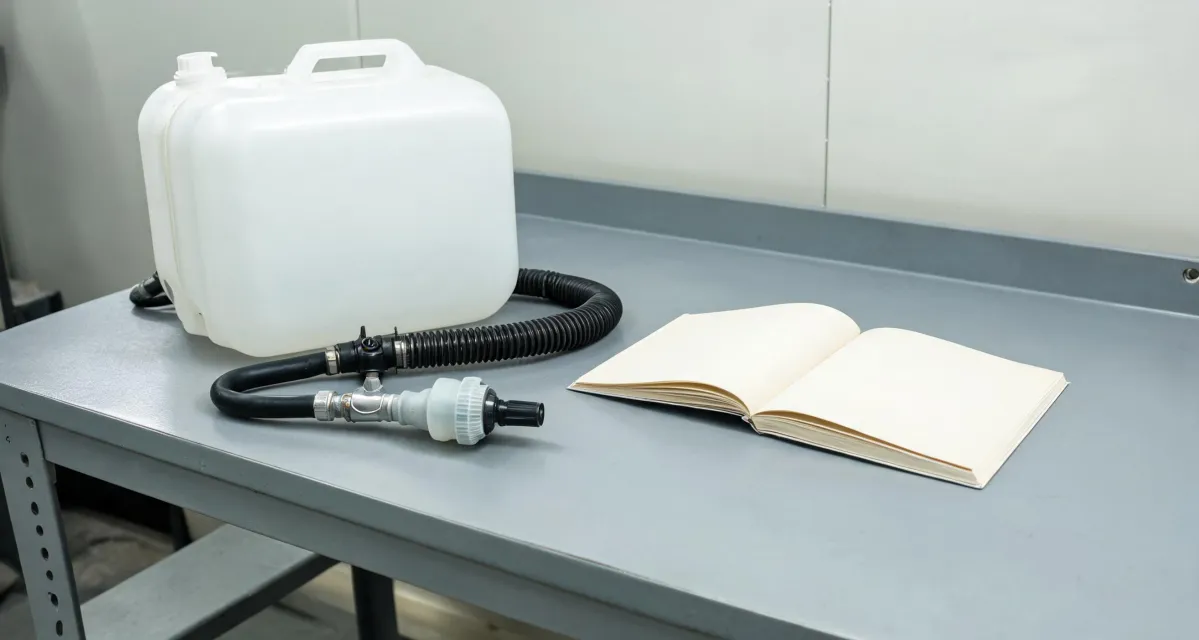
For the ECHO MB-5810, the paper manual in the box is the least reliable document an owner can start from. ECHO's own manuals page makes the point bluntly: operator's manuals uploaded there are the latest version and may be different from what was co-packed in the original box of the product you have. Everything below stays inside the MB-5810 — which manual version applies, where to go when no manual exists, and how a duster attachment changes which part of the documentation covers your unit. No service intervals appear here, no torque or clearance figures, no disassembly sequence.
One case voids most of this. If you bought the unit recently and the co-packed manual carries a version marking that matches the copy currently posted, your documentation question is already answered and the rest is a formality. For an older unit, a second-hand purchase, or a box that arrived with no paperwork, it is not.
The Box Manual Is Probably Not the Current One
The first mistake is assuming the paper manual describes the machine in front of you. A co-packed manual documents the product as it shipped; the upload documents the current text, and the two can diverge without either being misprinted. The consequence is quiet and cumulative. You follow a procedure, you cannot say which revision it came from, and when a later question arises about whether that text still applies, there is nothing on the shelf to check it against.
The fix costs minutes. Write the version or revision marking shown on the current upload next to the model and serial stamped on the unit's plate, and keep that pairing with the machine. The plate is the manufacturer's identification tag on the unit, carrying model, serial and any build marking. Once the pairing exists, a procedure you run next season traces back to a specific document version rather than a manual of unknown age.
Older MB-5810 Units May Have No Manual At All
The second mistake is treating a missing manual as something to be filled from memory once the work is already scheduled. ECHO's route for a manual you cannot find is to contact Yamabiko Corporation directly or a local distributor, and the same page carries its own caveat that some manuals for older models may not be available. Availability is a question with an unknown answer, which is why it belongs before the downtime rather than after it.
Consider a used MB-5810 bought at an auction with no paperwork in the crate. The owner has a serial plate, a machine, and nothing else. The productive move is to treat the missing document as a sourcing task with a deadline: ask the distributor what exists for that model and serial range, and hold the schedule until an answer comes back. Filling the gap from memory, or from a manual for a different model, produces a decision you cannot document and cannot check.
The obvious objection is that a dealer will simply talk you through the procedure on the phone, so the paper never matters. Verbal guidance is genuinely useful and is not the same thing as holding the document it refers to. A call gives you an answer for today; the version question stays open — which revision that answer came from, and whether it covers your serial — until something written carries it.
The Duster Accessory Changes What Your Manual Covers
The third mistake is opening to the misting section when the machine is set up to spread dry material. A duster accessory spreads dust or powder rather than liquid, and ECHO's MB-5810 product page describes the attachment in exactly those terms. That makes it a different application from misting, not a variation on it. The consequence is a search that runs through pages written for a configuration your unit does not have, and duster questions answered from misting text.
Before searching, photograph or list what came with the unit — the duster attachment if it is there, plus anything else that shipped in the crate — and match that list against the model page. The list does two things. It tells you which part of the documentation applies, and it keeps you from ordering parts for a configuration you do not own. Two units under one model name can leave the factory fitted differently, and the documentation follows the fitting, not the nameplate alone.
Buying Used Changes Which Manual You Should Trust
Treating whatever manual came with a used unit as sufficient is the mistake, and a used MB-5810 carries two documentation risks a new purchase does not. The upload reflects the latest version, so a co-packed manual from an earlier printing may not match it; older manuals may not be available at all, so a missing one is not always a closable gap. A seller who hands over a manual has not necessarily handed over the right one, and a seller with nothing to hand over may be describing a gap nobody can close.
Three questions settle most of it before money changes hands. Which manual is included, and does it carry a version marking that matches the unit? Were the accessories kept with the machine, specifically the duster attachment if the unit was configured that way? Can the seller read the model and serial off the plate? None of this tells you the condition of the machine, and nothing here should be read as a comment on wear, hours, or service history. It tells you whether the documentation trail exists.
Build the Document Set Before You Schedule Work
Booking shop time before the documents exist is the error here. The fix is a four-item set assembled once and kept with the machine: the model and serial exactly as the factory stamped them on the plate, the version marking on the paper copy in your hand, the accessory inventory that fixes whether a duster attachment belongs to this unit, and the contact route to Yamabiko or a distributor for whatever the first three cannot answer. Each item earns its place — the plate pairing stops a procedure from being matched to the wrong unit, the version marking stops the quiet drift between paper copy and upload, the accessory list keeps you out of sections written for a configuration you do not have, and the contact route turns an unclosable gap into an answer you get on one call. Keep that sheet with the machine.
A skeptic would say this is paperwork for a twenty-minute task, and the sheet costs more attention than the task deserves. The sheet is what decides whether the task can be specified at all. Without it you have a procedure from an unknown revision applied to an unidentified configuration, and the twenty minutes turn into a guess with a wrench in it.
What This Manual Check Cannot Tell You
Treating a version check as a service procedure is the last mistake on the list. No maintenance manual text for the MB-5810 was obtained for this article, so the boundary is explicit: no service intervals, no torque or clearance values, no adjustment figures and no disassembly sequence. A version check buys traceability, not procedure. The remaining gap closes through a document or through Yamabiko or a distributor; it does not close by inference from a similar model, which is where improvised numbers usually come from.
The tradeoff is worth naming. Checking versions costs a phone call and a sheet of paper and returns a documented starting point. Skipping it costs nothing today and returns a procedure you cannot source. On a machine with no obtainable manual the trade runs the other way — no amount of checking produces a document that does not exist, and the honest state of the record is a gap, not a reconstruction.
So the one check before you buy the unit, book the shop time, or order the first part is this: confirm that a manual matching your exact MB-5810 model and revision exists and is the version the manufacturer currently posts. That single item decides whether everything above is routine or a stop sign. ECHO warns that some manuals for older models may not be available, and one call to a distributor costs far less than finding the gap with the unit already apart.

Leave a purchasing question
Comments are for discussion. Use the procurement inquiry for business contact details and supplier matching requests.